
Choosing the best IPTV service in 2026 can make a significant difference to your entertainment experience. With more people watching television through internet-connected devices, IPTV has become an increasingly popular alternative to traditional cable and satellite TV. It offers a flexible way to access live television, on-demand entertainment, and other streaming content through a compatible internet connection.
However, not every IPTV provider offers the same experience. Streaming quality, channel availability, device compatibility, customer support, subscription costs, and licensing arrangements can vary considerably between services. Finding the right option requires more than simply choosing the cheapest subscription or the provider advertising the largest number of channels.
In this comprehensive guide, we explain how IPTV works, which features matter most, how to compare providers, and what to consider before purchasing an IPTV subscription. Whether you live in the United States, the United Kingdom, or Canada, this guide will help you make a more informed decision.
If you are searching for the best IPTV service for live television, sports, movies, or family entertainment, keep reading to discover the most important factors to evaluate before choosing a provider.
What Is IPTV?
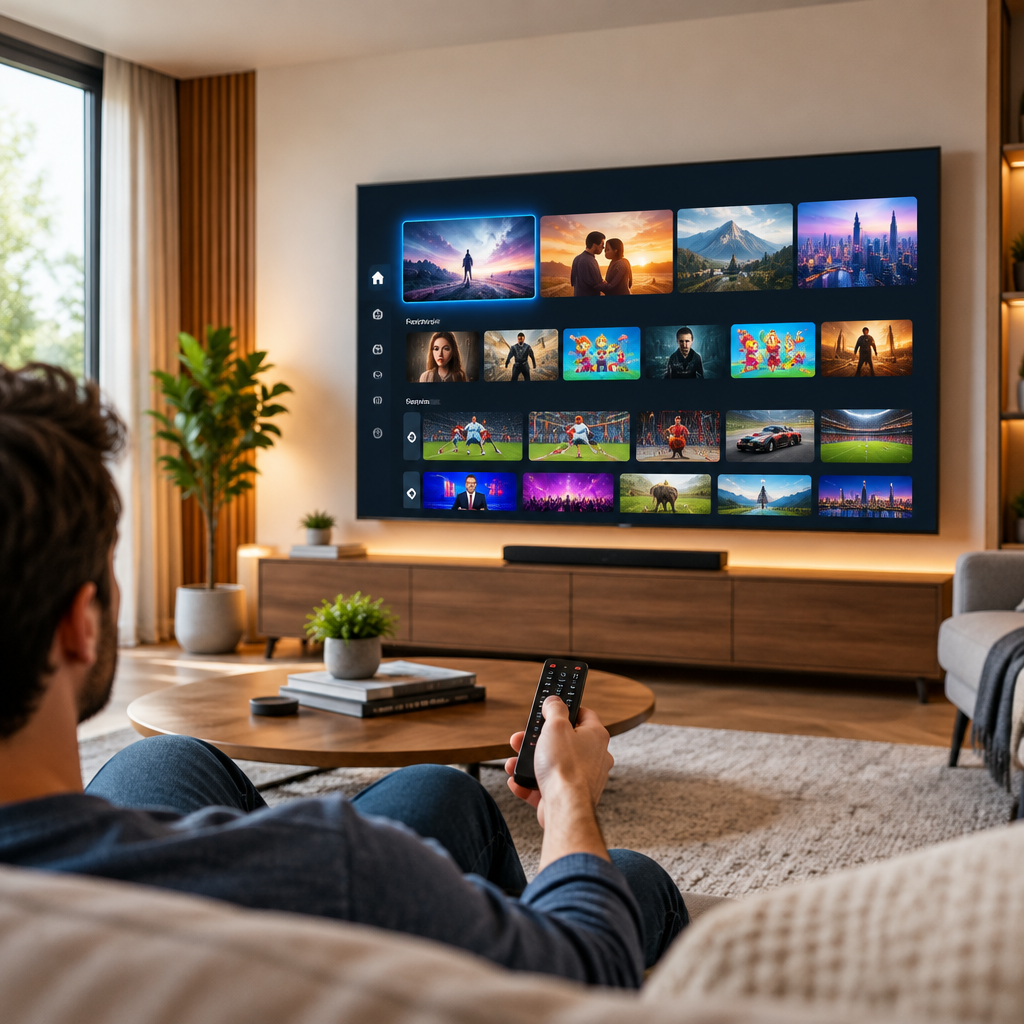
IPTV stands for Internet Protocol Television. It is a technology that delivers television programming and video content through internet protocol networks instead of relying exclusively on traditional terrestrial, cable, or satellite broadcasting.
With IPTV, compatible devices can receive video streams over an internet connection. Depending on the platform, viewers may access live television channels, catch-up television, video-on-demand libraries, and other interactive features.
Unlike traditional television packages that generally depend on specific broadcasting infrastructure, internet-based television can provide more flexibility in how and where people watch their preferred content.
For example, a household might use a television for evening entertainment, a smartphone while travelling, and a computer for watching programs during a break. The available features depend on the service, its licensing agreements, and the devices it supports.
How Does IPTV Work?
IPTV uses internet networking technologies to deliver video to a compatible application or device. When a viewer selects a channel or program, the platform requests the relevant stream and delivers it over the network.
A typical IPTV setup involves several components:
- Internet connection: Provides the network access required to receive video streams.
- IPTV provider or platform: Delivers authorized television programming and video content.
- Compatible device: Displays the content on a smart TV, streaming box, computer, tablet, or smartphone.
- Application or player: Provides the interface used to browse and play supported content.
- Subscription or account: Depending on the service, grants access to particular channels, features, or content libraries.
Some IPTV platforms operate their own applications, while others support compatible third-party players. The distinction matters because a media player is not necessarily a television-content provider.
Before purchasing a subscription, confirm which components are included and whether you need to install a separate application.
Why Are More People Searching for the Best IPTV Service?
Internet television appeals to viewers who want convenient access to entertainment across multiple devices. Several factors explain why consumers compare IPTV services before deciding which option suits their household.
1. Flexible Viewing Options
Many IPTV platforms allow viewers to watch supported content on different compatible devices. This flexibility can be useful for households that do not want to rely on a single television.
Depending on the provider, users may be able to watch through a smart TV, streaming device, desktop computer, or mobile application.
Always check the number of simultaneous streams permitted by the subscription. Supporting several devices does not automatically mean that the account allows multiple people to watch different programs at the same time.
2. Live Television and On-Demand Content
Some services combine live television with on-demand programming. This can provide a convenient experience for viewers who enjoy scheduled broadcasts as well as programs they can watch whenever they choose.
Content availability varies by provider and territory. Sports broadcasts, films, television series, and premium entertainment may be subject to separate licensing restrictions.
A good provider should explain exactly what its subscription includes instead of relying on vague promises.
3. Potential Cost Savings
Consumers often compare IPTV subscriptions with traditional television packages to determine which provides better value.
Internet television may be more economical for some households, but the cheapest option is not necessarily the best. Consider the full cost, including the subscription, internet access, compatible hardware, and any additional application fees.
Compare equivalent services and content before deciding whether switching will save money.
4. Personalized Entertainment
Some IPTV applications offer electronic program guides, favorites lists, parental controls, subtitles, and playback options. These features can make browsing and watching content easier.
However, not every provider supports every feature. Check the specific functionality available on your preferred device before subscribing.
What Makes the Best IPTV Service in 2026?
The best IPTV service is not necessarily the platform with the most advertised channels. It is the service that combines authorized content, dependable playback, suitable features, transparent pricing, and responsive support.
Use the following criteria when comparing available providers.
1. Streaming Quality and Resolution
Picture quality is one of the most important considerations when choosing an IPTV subscription.
Some services offer standard definition, HD, Full HD, or 4K content. Actual resolution depends on the source material, the provider’s stream, your device, and your internet connection.
A provider advertising 4K does not guarantee that every channel or program will be available in 4K.
When comparing services, look for:
- Clearly stated video resolutions.
- Consistent picture quality during normal viewing.
- Appropriate bitrate for the selected resolution.
- Support for compatible televisions and streaming devices.
- Accurate information about HD and 4K availability.
For the best results, test the service using the same device and internet connection you normally use.
2. Reliability and Buffering
Buffering occurs when a video player cannot receive data quickly enough to maintain uninterrupted playback. It can result from network congestion, weak Wi-Fi, insufficient bandwidth, overloaded servers, or problems with the streaming source.
Even an advertised premium IPTV subscription can experience interruptions.
Before committing to a long subscription, check whether the provider offers a legitimate trial or short-term plan. Test it at different times of day, including peak viewing hours.
Look for a provider that communicates clearly about service interruptions and provides practical troubleshooting assistance.
3. Channel Selection and Content Availability
Channel selection is another major consideration when evaluating the best IPTV service.
Different viewers have different priorities. Some primarily watch local news, while others prefer documentaries, children’s programming, entertainment, or sports.
Instead of choosing a subscription based on the total channel count, determine whether it offers the specific programming you want to watch legally in your location.
Ask these questions before purchasing:
- Are the channels I want included?
- Are local channels available where I live?
- Is the advertised content currently licensed for distribution?
- Are regional restrictions clearly explained?
- Are channel names and program listings accurate?
- Are catch-up and recording features available, if needed?
A smaller, reliable collection of relevant channels can be more valuable than a huge catalogue containing unavailable or incorrectly listed streams.
4. Device Compatibility
The best IPTV provider for a smart television may not be the best option for someone who mainly watches on a phone or computer.
Check the provider’s official compatibility information before buying.
Common device categories include:
- Smart televisions running supported operating systems.
- Android TV and Google TV devices.
- Apple TV and compatible Apple devices.
- Amazon Fire TV devices.
- Windows and macOS computers.
- Compatible smartphones and tablets.
- Supported streaming boxes.
Device support can vary by application, subscription, operating-system version, and region.
If you plan to watch on multiple devices, verify whether the service requires separate subscriptions, additional licenses, or specific applications.
5. Electronic Program Guide (EPG)
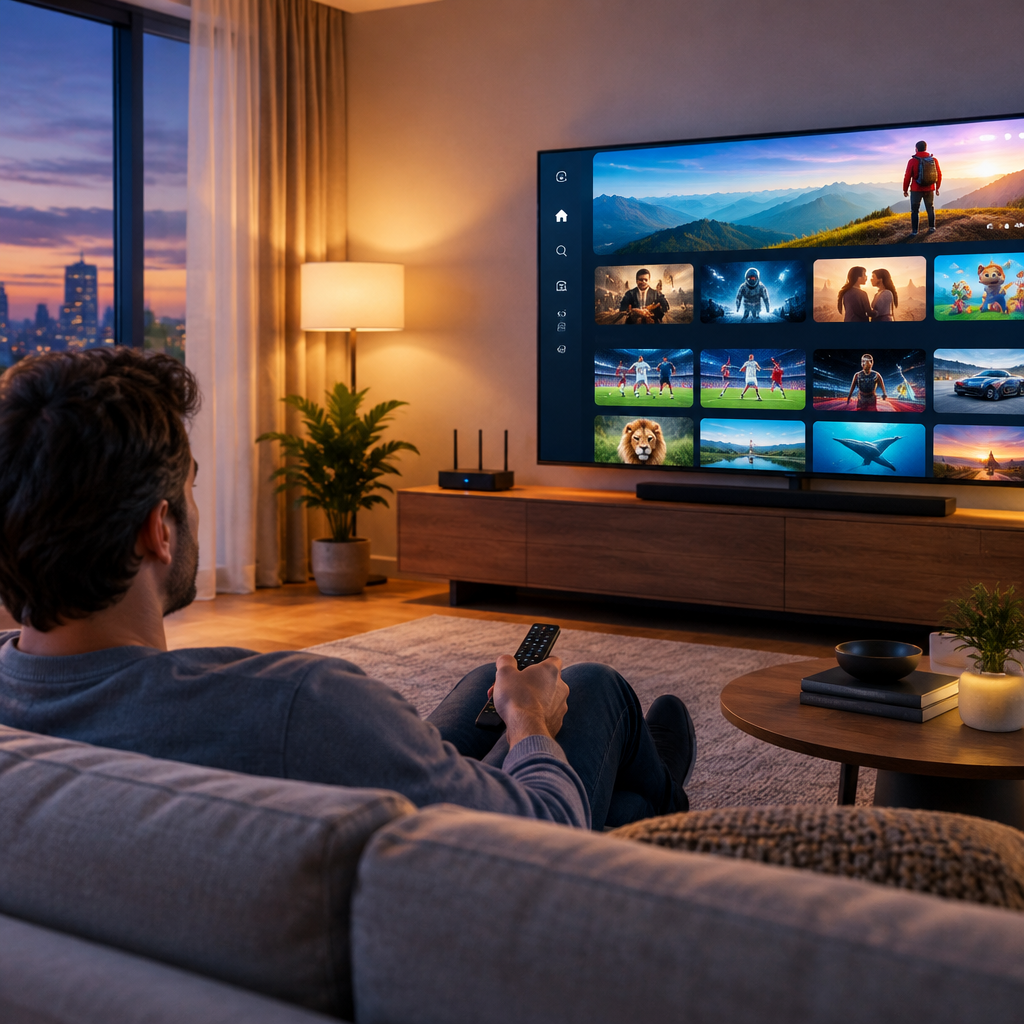
An electronic program guide displays information about television schedules. Depending on the platform, it may show current programs, upcoming broadcasts, descriptions, and start times.
A well-maintained EPG helps viewers browse available programming without having to search manually.
When comparing IPTV services, check whether the program guide is included, how frequently it is updated, and whether it supports the channels you actually watch.
Accurate schedules are particularly useful for live events and regularly scheduled programs.
6. Video-on-Demand Features
Some internet television platforms include libraries of movies, documentaries, and television series.
If on-demand entertainment is important to you, check the following:
- Whether the desired titles are available.
- How often the catalogue changes.
- Whether audio and subtitle options are provided.
- Whether playback resumes from the last position.
- Whether the content is licensed for your territory.
- Whether the library is included in the advertised subscription price.
Do not assume that a provider offering live television automatically includes an extensive on-demand catalogue.
7. Customer Support
Good customer support can make a significant difference when technical problems occur.
Before purchasing, determine how the provider handles questions, account issues, billing disputes, and playback problems.
Useful support options may include email, a help centre, live chat, or documented troubleshooting instructions.
Look for clear contact information and realistic response-time expectations. Be cautious if a seller refuses to explain its service, requests unnecessary personal information, or makes unrealistic guarantees.
8. Transparent Pricing
Subscription prices vary according to content, features, licensing, device support, and billing arrangements.
The best IPTV subscription for your budget should offer a clear description of what you receive and what you must pay.
Review the following before checking out:
- Total subscription cost.
- Billing frequency.
- Automatic renewal conditions.
- Refund and cancellation policies.
- Taxes or additional fees.
- Trial limitations.
- Simultaneous-stream restrictions.
Avoid paying for a lengthy subscription before you have verified the provider’s legitimacy and the service’s suitability.
9. Security and Privacy
An IPTV application may process account information, device information, or payment details. Choosing a trustworthy provider helps reduce unnecessary security and privacy risks.
Prefer official applications, reputable app stores, secure payment methods, and clearly documented privacy policies.
Avoid downloading unknown applications from unverified websites or installing files that request suspicious permissions.
Never share your passwords, payment credentials, or verification codes with an IPTV seller.
10. Legal Content Licensing
Content licensing is one of the most important factors to consider when choosing an IPTV service.
The technology itself is not inherently illegal. Legitimate broadcasters, television networks, and streaming platforms use internet protocols to distribute authorized content.
Problems arise when a service distributes copyrighted channels or programs without the necessary rights.
Before subscribing, check whether the provider is authorized to distribute its advertised content in your country. Licensing may differ between the United States, the United Kingdom, and Canada.
A trustworthy service should provide clear information about its business, content rights, terms, and customer support.
Best IPTV Options for Different Types of Viewers
There is no single service that is best for every household. The right choice depends on your viewing habits, location, budget, and preferred devices.
Rather than selecting a provider solely because it advertises thousands of channels, start by identifying the features that matter most to you.
Best IPTV for the USA
Viewers in the United States may prioritize local television, national news, sports, entertainment, and family programming.
When comparing services available in the USA, look for:
- Access to the specific local channels you need.
- Clear information about regional sports availability.
- Support for your television or streaming device.
- Reliable access to authorized live broadcasts.
- Transparent monthly pricing.
- Clear cancellation and renewal terms.
Local channel availability can depend on your location, and sports broadcasting rights may be divided among several services.
Check the official channel lineup before subscribing instead of assuming that every advertised package includes your preferred regional programming.
Best IPTV for the UK
UK viewers may want access to news, entertainment, children’s television, documentaries, and sports.
When evaluating a service for the United Kingdom, consider:
- Whether the relevant UK channels are included.
- Whether live broadcasts are licensed for UK distribution.
- Compatibility with your preferred devices.
- The quality of its program guide.
- Its support arrangements and subscription conditions.
- Any restrictions on watching while travelling.
Official broadcaster applications and licensed television packages are worth comparing alongside independent internet television platforms.
Best IPTV for Canada
Canadian viewers may prioritize local and national channels, English-language entertainment, French-language programming, and regional sports.
Before choosing an IPTV subscription in Canada, check:
- Availability of the channels you watch most.
- English and French content options.
- Regional broadcasting restrictions.
- Device compatibility.
- Whether the service supports the required simultaneous streams.
- Total monthly cost.
If you frequently watch content from a particular province or region, confirm that the relevant programming is included and available at your location.
Best IPTV for Families
Families often need a service that works reliably across shared devices and offers appropriate content controls.
Important features may include:
- Parental controls.
- Children’s programming.
- Separate profiles, where available.
- Clear simultaneous-stream limits.
- Easy navigation.
- Reliable playback.
- Straightforward cancellation options.
Parents should review content categories and available restrictions before allowing children to use an application independently.
Best IPTV for Sports Fans
Sports fans should prioritize authorized access to the competitions they follow.
Before purchasing, verify the availability of your preferred leagues, competitions, and live events in your region.
Check whether broadcasts include commentary, replays, highlights, and supported playback quality.
Sports rights frequently vary by territory and season. No provider should be assumed to carry every major event simply because it advertises a large channel catalogue.
IPTV Subscription Pricing: What Should You Expect?
The cost of IPTV depends on the service model.
Some platforms charge a monthly fee, while others offer annual plans or bundle television with other streaming products. Certain services may require a compatible device or a separate application license.
There is no universal price that defines a good IPTV subscription.
A useful comparison should include both price and the value of the features provided.
For example, consider two services:
Service A offers a low monthly price but limited customer support, unclear renewal terms, and an incomplete channel guide.
Service B costs more but provides transparent licensing information, responsive support, suitable device compatibility, and clearly documented subscription conditions.
Service B may represent better value even if its headline price is higher.
Before purchasing, calculate the total cost over the period you intend to use the service. Check the cancellation policy and confirm whether the price changes after an introductory offer.
If you are unsure about a provider, a short-term subscription is generally a more cautious starting point than an annual commitment.
How to Choose the Right IPTV Subscription: A Step-by-Step Guide
Follow these steps to narrow down your options and avoid common purchasing mistakes.
Step 1: Identify Your Viewing Priorities
Write down the channels, types of programming, and features you actually need.
For example, you might mainly watch local news, documentaries, and family entertainment. Another viewer might prioritize live sports and international programming.
Knowing your priorities helps you avoid paying for features you will never use.
Step 2: Check Official Compatibility Information
Identify the television, streaming box, smartphone, or computer you intend to use.
Visit the provider’s official website or documentation and confirm that your device is supported.
Do not assume that an application compatible with Android phones will necessarily work on every Android TV device.
Step 3: Verify the Provider
Research the company’s identity, contact information, licensing statements, privacy policy, and subscription terms.
Search for independent customer feedback, paying attention to specific experiences involving billing, service quality, and support.
Be cautious about reviews that appear identical, make extraordinary claims, or provide no verifiable details.
Step 4: Compare Pricing and Conditions
Review the total cost, available plans, refund rules, and renewal arrangements.
Determine whether the provider offers a trial, a monthly subscription, or another low-commitment option.
Make sure you understand exactly what is included before entering payment information.
Step 5: Test Streaming Performance
If a legitimate trial is available, test the service under normal viewing conditions.
Try the channels you intend to watch, check whether the program guide works, and assess picture quality.
Testing at different times can help you identify network or capacity problems that might not appear during a short demonstration.
Step 6: Review Customer Support
Ask a practical question before subscribing. For example, you could ask whether your television model is supported or how cancellation works.
A clear, accurate response can help you evaluate the quality of the provider’s customer service.
Step 7: Choose a Suitable Subscription
After comparing the important factors, choose the provider that meets your needs and budget.
Keep a record of your subscription details, payment confirmation, renewal date, and cancellation instructions.
Review the service periodically to make sure it continues to provide the value you expected.
What Internet Speed Do You Need for IPTV?
Your internet connection plays an important role in streaming quality. However, the bandwidth required depends on the resolution, video bitrate, network conditions, and number of devices using the connection.
The following figures are general planning estimates rather than universal minimum requirements.
| Video quality | Approximate bandwidth for one stream |
|---|---|
| Standard definition (SD) | 3–5 Mbps |
| High definition (HD) | 5–10 Mbps |
| Full HD (1080p) | 8–15 Mbps |
| 4K Ultra HD | 20–25+ Mbps |
Actual requirements can be higher or lower depending on the service and video encoding.
If several people are streaming simultaneously, the household needs enough available bandwidth for all active streams, along with capacity for other internet activities.
Tips for Improving IPTV Streaming
If you experience buffering or interruptions, try these practical troubleshooting steps:
- Restart your streaming device and router.
- Test your internet speed on the device you use for viewing.
- Move closer to your Wi-Fi router or use a wired Ethernet connection when possible.
- Pause large downloads and other bandwidth-intensive activities.
- Update the official application and your device’s operating system.
- Check whether the issue affects one channel or the entire service.
- Contact the provider if problems persist.
A fast internet connection cannot fix every problem. If the provider’s streaming infrastructure or source feed is experiencing difficulties, local network changes may not resolve the interruption.
IPTV Apps vs IPTV Providers: What Is the Difference?
Understanding the distinction between an IPTV application and a content provider can prevent confusion when shopping for a subscription.
An IPTV application or media player is software that plays supported streams or organizes compatible media sources. It may offer an interface, favorites, playback controls, and program-guide support.
A television-content provider, by contrast, supplies the channels or programs themselves and is responsible for having the appropriate distribution rights.
Some platforms combine both functions in a single service. Others require customers to use a separate player.
Installing an application does not automatically provide access to television channels or a subscription.
Before paying, confirm which part of the service you are purchasing and whether you need an additional authorized content subscription.
Common IPTV Buying Mistakes to Avoid
Choosing a service without checking its features or terms can lead to unnecessary expenses and disappointment.
Here are some common mistakes to avoid.
Choosing a Provider Only Because of Channel Count
A Best IPTV advertised channel count does not guarantee useful content, good picture quality, or dependable streaming.
Focus on the channels you need and whether they are available through authorized distribution.
Paying for a Long Subscription Immediately
An annual plan may appear cheaper per month, but it can expose you to greater financial risk if the service is unsuitable or stops operating.
Consider testing the service through a legitimate trial or short-term plan first.
Ignoring Device Limitations
Some applications work only on supported operating systems or devices. Others limit simultaneous streams.
Confirm compatibility and account restrictions before making a purchase.
Overlooking Renewal Conditions
Some subscriptions renew automatically. Others expire without renewal or require manual cancellation.
Read the billing terms carefully so you understand what happens when the current subscription period ends.
Trusting Unrealistic Guarantees
Be skeptical of claims promising perfect uptime, unlimited simultaneous streams, every premium channel, or universally available 4K content.
Technical performance and content rights have real limitations. Reliable providers explain those limitations rather than hiding them.
Ignoring Content Rights
A low price or attractive interface does not establish that a service is authorized to distribute its content.
Check the provider’s licensing information and choose a legitimate service that respects applicable copyright rules.
Is IPTV Better Than Traditional Cable TV?
The answer depends on your preferences, location, internet connection, and available television packages.
| Feature | IPTV and internet TV | Traditional cable or satellite |
|---|---|---|
| Delivery method | Internet connection | Cable or satellite infrastructure |
| Device flexibility | Depends on the platform | Depends on the provider and equipment |
| Internet dependency | Usually required | Varies by service and equipment |
| Channel availability | Depends on content rights and plan | Depends on the television package |
| Pricing | Varies by subscription | Varies by package and location |
| On-demand features | Depends on the platform | Depends on the provider |
| Installation | May require only an app and compatible device | May require provider equipment or installation |
Internet television can be convenient for viewers who prefer flexible device access and internet-based viewing. Traditional television packages may be preferable for households that value bundled services or want a provider-managed installation.
Compare the actual services available in your area before deciding which model offers better value.
Is IPTV Legal in 2026?
IPTV is a delivery technology, not a guarantee of legality or illegality.
Legitimate broadcasters and streaming platforms distribute authorized content through internet-based systems. Other services may offer copyrighted programming without the necessary permission.
The legal position depends on the content, distribution rights, jurisdiction, and circumstances.
In the United States, the United Kingdom, and Canada, copyright and broadcasting rules may affect how television content can be distributed and accessed.
To reduce risk, choose a provider that identifies its business, explains its content offerings, provides clear terms, and has appropriate rights to distribute the programming it advertises.
Do not assume that a service is legitimate simply because it accepts payments, has a professional website, or offers a large channel list.
Frequently Asked Questions About the Best IPTV Service
1. What is the best IPTV service in 2026?
The best IPTV service depends on your location, preferred channels, budget, and devices. Compare authorized content availability, streaming quality, customer support, pricing, and subscription terms before choosing a provider.
2. Is IPTV worth paying for?
IPTV can be worthwhile if it provides the programming and features you need at a competitive total cost. Compare it with licensed streaming subscriptions and traditional television packages to determine whether it offers sufficient value.
3. Can I use IPTV on a smart TV?
Many internet television services support compatible smart TVs, but availability depends on the provider, application, and operating system. Check the official compatibility documentation for your television model.
4. Does IPTV work on Fire TV devices?
Some IPTV services and media applications support compatible Amazon Fire TV devices. Verify that the application is officially available for your model and that the content service is authorized.
5. Can I watch IPTV on my phone?
Yes, many legitimate internet television services provide applications for supported smartphones and tablets. Some services also allow access through a mobile browser.
Check whether your subscription includes mobile viewing and whether simultaneous-stream restrictions apply.
6. Does IPTV require high-speed internet?
IPTV generally requires a stable internet connection. The bandwidth needed depends on resolution, bitrate, network conditions, and the number of simultaneous streams.
HD and 4K content typically require more bandwidth than standard-definition video.
7. Why does IPTV keep buffering?
Buffering can result from weak Wi-Fi, network congestion, insufficient bandwidth, device limitations, or problems with the streaming provider.
Test your connection, restart your equipment, and check whether the issue affects one channel or all content. If the problem continues, contact the provider.
8. Is 4K IPTV always better?
Not necessarily. A genuine 4K stream can provide greater detail on a compatible screen, but picture quality also depends on bitrate, source quality, and video encoding.
A stable, high-quality HD stream may provide a better viewing experience than a poorly delivered stream advertised as 4K.
9. Can one IPTV subscription be used on multiple devices?
That depends on the provider’s terms. Some subscriptions permit multiple registered devices but restrict simultaneous viewing. Others require additional subscriptions or licenses.
Check the exact device and simultaneous-stream limits before purchasing.
10. What is an IPTV EPG?
EPG stands for Electronic Program Guide. It displays information about available programs and their schedules.
Depending on the platform, it may show current broadcasts, upcoming programs, and descriptions. Its usefulness depends on the accuracy and availability of schedule data.
11. Do IPTV subscriptions include movies and TV series?
Some subscriptions include authorized video-on-demand libraries, while others focus on live television. Check the advertised catalogue, supported languages, subtitles, and licensing arrangements before subscribing.
12. Can I cancel an IPTV subscription?
Cancellation options depend on the provider’s terms and billing arrangements. Review the cancellation procedure, renewal date, and refund policy before making a payment.
Keep a record of your confirmation and any cancellation correspondence.
13. Is free IPTV safe?
Some free internet television services are legitimate, including official broadcaster applications and authorized ad-supported platforms. However, unknown services may pose privacy, security, or copyright risks.
Use reputable sources, avoid suspicious downloads, and review the application’s permissions before installation.
14. Should I choose a monthly or annual IPTV plan?
A monthly plan generally offers greater flexibility and less upfront financial exposure. An annual plan may reduce the effective monthly price but involves a longer commitment.
If you have not tested a provider, consider a short-term option first.
15. What should I check before buying an IPTV subscription?
Verify content licensing, channel availability, device compatibility, streaming quality, customer support, pricing, cancellation terms, and privacy practices. A legitimate trial can also help you evaluate the service before committing.
Final Verdict: How to Find the Best IPTV Service
Finding the best IPTV service in 2026 means identifying a platform that fits your viewing habits while providing transparent pricing, authorized content, dependable performance, and appropriate device support.
Do not base your decision solely on the lowest price or the largest advertised channel count. Instead, compare the channels you actually watch, test playback quality when possible, review customer support, and understand the subscription terms.
Whether you are looking for internet television in the USA, UK, or Canada, taking a few minutes to research your options can help you avoid unnecessary expenses and choose a service that meets your expectations.
Ready to choose your IPTV service? Start by identifying your preferred channels, checking your device compatibility, and comparing legitimate providers. Review the available plans carefully, and select a subscription that offers the features you need at a price that fits your budget.
The right IPTV experience is not about having the most channels. It is about enjoying the content you want through a reliable, secure, and properly licensed service.